Monday, 24 May 2010

CARNIVAL OF THE ANIMALS / PETER AND THE WOLF / Kamchatka Theatre Company and Singapore Festival Orchestra / Review

CARNIVAL OF THE ANIMALS
PETER & THE WOLF
Kamchatka Theatre Company
Singapore Festival Orchestra
Esplanade Concert Hall
Friday (21 May 2010)

This review was published in The Straits Times on 24 May 2010.

(The "sacking" of Esplanade Concert Hall, as reported earlier, was part of this act... just in case you were wondering.)

It looked like a scene from Bangkok today. Graffiti on the walls, litter strewn on every inch, and concertgoers were cordoned off, barred from entering the hall. A minivan then gatecrashed the foyer. Instead of riot police, it was 16 members of Spain’s Kamchatka Theatre Company, an outfit more in league with the Keystone Cops.

Music was on the plate, but not before a prolonged foreplay of acrobatics, juggling and visual comedy to set the mood. This reviewer was literally carried away, fireman-lifted by one of the troupe and unceremoniously dumped onto the stage (some say a fate befitting all critics).

Director Adrian Schvarzstein, perfect for the part with his brow-beaten demeanor, engaged and teased. When former Deputy Prime Minister Dr Tony Tan left his seat with grandchild in tow, probably to use the conveniences, he quipped, “You are going to do pee pee now?” Prostate problem or otherwise, the concert resumed after the duo returned.

The first part was a choreographed Carnival of the Animals by Camille Saint-Saens, with the twin sister act of pianists Low Shao Ying and Shao Suan, both of whom were royally carried to their stools. But first, a conductor had to be found. The chubby boy in the second row tried his luck and was ejected. Then a pretty senorita emerged from the audience, “I’ve got conducting lessons!” she pleaded. The orchestra seemed to like her looks, and so maestra Virginia Martinez raised her baton.
SFO cellist Elizabeth Tan does her best Jackie du Pré impression.

Placards with big bold titles were flashed in each of the 14 movements. The street actors did their spiels, which included Mister Bean and Monty Pythonesque routines, culminating with The Swan, a gravity-defying ballet on drapes slung high above the stage.

“The second part is the part after the first part,” drolly declared Schvarzstein. Without an intermission, the Singapore Festival Orchestra accompanied Suzie Templeton’s 2006 animated film Peter & the Wolf. Radically different from previous incarnations, there was a gritty edge to the production, which swung between genuine tension and humour, and an eco-conscious twist at the end. There was no need for narration, as the story told itself with split second synchronisation from the musicians playing Prokofiev’s familiar score.

More anarchic than Babies Proms and more riotous than a Taiwanese parliamentary session, the 2010 Singapore Arts Festival has midwifed a winning act of uncommon pedigree.

Everybody loves the Singapore Festival Orchestra!

Take a bow, Kamchatka!

Sunday, 23 May 2010

ESPLANADE CONCERT HALL SACKED BY VANDALS. Pink Shirts Top On List Of Suspects


In the worst case of civil unrest in Singapore since 1969, Esplanade Concert Hall - Singapore's icon of cultural superiority - was sacked and pillaged. Concertgoers to the Singapore Festival Orchestra concert on 21 May were greeted with scenes of mayhem and disorder. These photos illustrate the extent of the damage, thought to be in the millions of dollars. More severely hit is Singapore's prestige as the cultural capital of Southeast Asia and the paradigm of cleanliness and sterility.


Graffiti covering windows of Esplanade Concert Hall.
Barricades at the foyer,
a scene resembling downtown Bangkok.
More litter about. How could people do this?
Grand staircase no longer.
More carnage at the concert hall seats.
A blow to Steinway,
as even the stage was not spared the damage.


Said Benson Puah, CEO of Esplanade and the National Arts Council (NAC), "This is a total disgrace. How dare these people desecrate Singapore's greatest cultural icon? And on the wake of Dr Goh Keng Swee's funeral too. This is a triple blow to everything our great nation has stood for. What have we done to deserve this? There will be a full-scale investigation and inquiry, I assure you." 

Meanwhile, it is thought that the perpetrators behind this orgy of destruction are the Pink Shirts, a militant group protesting NAC's $20,000 cut of the annual budget of the radical theatre group Wild Rice. Fortunately, there have been no casualties. 

Several Esplanade front-of-house staff have been treated for hyperventilation and syncope, having previously only been accustomed to ticking off patrons for taking photos in the hall. Cleaning staff have also gone on strike.

Friday, 21 May 2010

CD Reviews (The Straits Times, May 2010)


BEETHOVEN Cello Sonatas (Complete)
LI-WEI QIN, Cello
ALBERT TIU, Piano
Decca 889 9119 (2CDs)
*****

Beethoven composed only five sonatas for the cello and piano, but these spanned the three different periods of his creative output. These are highly original works without precedent in the repertoire. The early pair of Op.5 sonatas are in two movements each; the first is preceded by a slow introduction, a nod to earlier baroque forms. This architecture is repeated in the late C major Sonata (Op.102 No.1), and the threesome is housed in the first disc. The “middle period” A major (Op.69) and final D minor Sonata (Op.102 No.2), slightly longer essays, come on a second disc.

The duo of Chinese-Australian cellist Li-Wei Qin and Filipino pianist Albert Tiu, both resident in Singapore at the Yong Siew Toh Conservatory, respond with vigour and brio, breathing life into these scores. Qin’s tone is voluminous and breathtaking, while Tiu’s exacting piano partnership comes through with great immediacy and clarity. With superb recorded sound, this set (which retails for the price of one disc) deserves to happily sit alongside celebrated versions by Rostropovich, Maisky and Yo-Yo Ma.


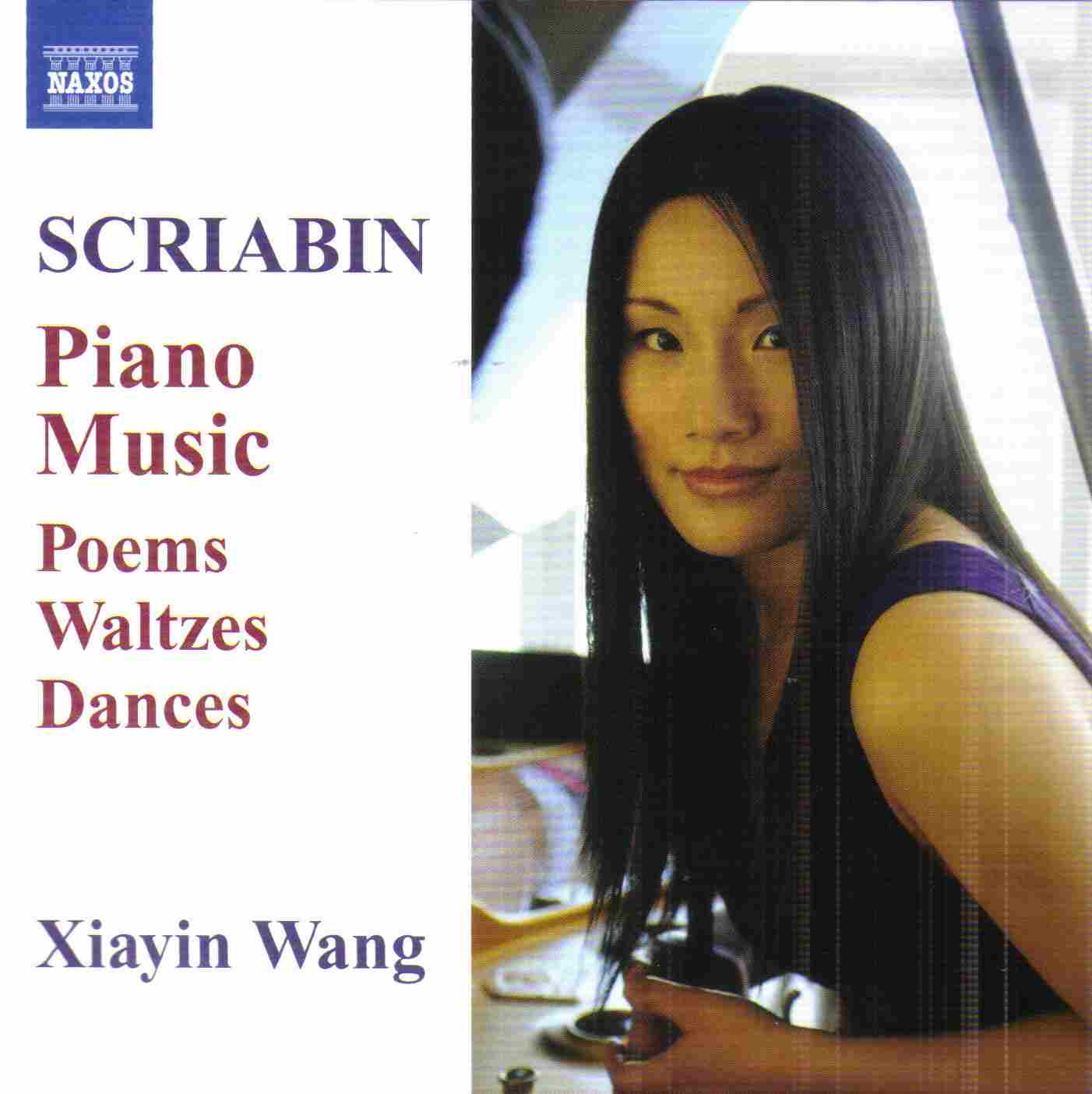
SCRIABIN Piano Works
XIAYIN WANG, Piano
Naxos 8.570412
****1/2


Towards The Flame is the unofficial title of this anthology of piano music by the Russian mystic composer Alexander Scriabin (1872-1915), chronologically tracing his evolution from ardent Romantic to raving modernist. The contrasts could not have been more stark, beginning with two early waltzes (Op.1 and Op. posthumous) which betray Chopin’s influence and salon pretensions. Becoming more adventurous with harmonies and dynamics, his Polonaise (Op.21) and Fantasy (Op.28) break free from social niceties.

Some of the shorter pieces are titled Poems, some with fanciful descriptions. Tragic Poem (Op.34) is restless while Satanic Poem (Op.36) is a ironic portrait of masked hypocrisy. The works get weirder and more enigmatic by the track, culminating in the eponymous Vers La Flamme (Towards The Flame), an obsessive single-themed number that splutters, sizzles and sears like a Roman candle. One writer described this as Scriabin’s vision of the nuclear bomb. The elegant American-trained Chinese pianist Xiayin Wang has the full measure of Scriabin’s neuroses and febrile flailings, with the vividly recorded sound and her personal programme notes as definite plusses.


MARTHA ARGERICH AND FRIENDS
LUGANO FESTIVAL 2009
EMI Classics 6073672 (3CDs)
*****

Chamber music festivals bring together musicians from all around the globe, often to play music not regularly heard in concert halls. These highlights from the 2009 Lugano Festival present some rarities, such as Mendelssohn’s precocious Piano Sextet (written when he was just 15), Glinka’s Grand Sextet (a jolly if un-nationalistic work) Ernest Bloch’s austere First Piano Quintet and Bartok’s elusive Second Violin Sonata. Performed before a “live” audience, there is an immediacy and frisson usually absent in studio recordings.

The chief instigator here is super-pianist Martha Argerich, who stars in no less than 80 minutes of music including the scintillating solo in Manuel de Falla’s sultry piano concerto Nights In The Gardens Of Spain (Orchestra della Svizzera Italiana conducted by Alexander Vedernikov). She also partners a host of rising talents in Schumann’s Fantasy Pieces Op.88 (with the Capuçon sibs) for piano trio, Chopin’s Introduction & Polonaise Brillante Op.3 (with cellist Gautier Capuçon), and piano duets - excerpts from Mendelssohn’s A Midsummer Night’s Dream (with newcomer Cristina Marton) and Liszt’s Don Juan Fantasy (with Mauricio Vallina). A very enjoyable three and a half hours that passes all too quickly.

Pianists for chamber works:
Khatia Buniatishvili (Mendelssohn & Bartok)
Polina Leschenko (Glinka)
Lilya Zilberstein (Bloch)

Tuesday, 18 May 2010

THE MAGIC OF BRAHMS / VCH Chamber Series / Review

THE MAGIC OF BRAHMS
Musicians from SSO
Victoria Concert Hall

Sunday (16 May 2010)

This review was published in The Straits Times on 18 May 2010.


What exactly is the magic of Brahms? Subtler than Beethoven, more sophisticated than Bruckner, less hysterical than Mahler, Johannes Brahms’s (1833-1897) music reaps further rewards on repeated listening than any other. Thematically coherent and structurally sturdy, his melodies are memorable and less subject to imitation and parody.
The two-hour long chamber concert, the last in a series before Victoria Concert Hall’s imminent overhaul, juxtaposed Brahms’s works of youth and late maturity. The autumnal Clarinet Quintet in B minor (Op.115) breathed a mellowness that was introspective and calming. Over a string exposition, Li Xin’s clarinet floated commandingly, with a lustrous glow that radiated warmth on the outset.

In a show of quiet authority, it was encouraging to note this young graduate from the Yong Siew Toh Conservatory’s first intake holding his own amongst the Singapore Symphony’s more experienced players. It was not a solo effort that counted, but the near-perfect balance achieved as a group of five musicians.

Long-breathed passages were a joy, keenly matched by the more mobile moments in the Scherzo and finale’s theme and variations. That the 35-minute work closed on a quiet and reposeful note was not a surprise; the older Brahms was not prone to severe dynamic upheavals.
Quite different was the early First Piano Quartet in G minor (Op.25), symphonic in scope and coloured with all sorts of possibilities. Darkness alternated with shafts of light, tension contrasted with release, and passion skirting on the impetuous. Lim Yan’s flashy piano part was virtuosic and soloistic, yet well integrated into the ensemble as a whole.

Despite coming close to 40 minutes, the music moved with urgency, supported by violinist Chan Yoong Han, cellist Yu Jing (both of whom featured in the two works) and violist Zhang Manchin. The ante was upped for the gypsy-flavoured Rondo, a rambunctious romp that nearly brought the house down.

There was a thoughtful encore, the Andante from the Third Piano Quartet (Op.60), dedicated in memory of Dr Goh Keng Swee (left), the orchestra’s forefather and patron of 31 years, who died earlier in the week. Beauty and poignancy could not have found a better medium in Brahms.

Sunday, 16 May 2010

SIMPLE GIFTS: ANNA KOOR Vocal Recital / Review

SIMPLE GIFTS
ANNA KOOR Vocal Recital
with Shane Thio, Piano
Esplanade Recital Studio
Saturday (15 May 2010)


This review was published in The Straits Times on 17 May 2010.

Lovers of the voice have had it good this past week. After the earlier triumphs of Andrea Bocelli and Sumi Jo, it was left to Singaporean mezzo-soprano Anna Koor to prove that this island-republic has produced some decent singers too. Her 70-minute long recital of folksongs from around the world was simply a pleasure.

She began with Dvorak’s Zigeunerlieder (Gypsy Songs), displaying a rich, full-bodied ringing tone, one that has matured steadily over the years. No actual gypsy melodies were quoted here, instead the cycle of seven songs sung in German delighted in the itinerant people’s free spirit and rhythmic vibrancy.

Dark and passionate hues alternated with the radiantly expressive, culminating with the most familiar number of the set, Songs My Mother Taught Me, sung with a winsome twinkle in the eye. The richly textured and Brahmsian piano accompaniment was perfectly handled by Shane Thio (left).

Next were four English songs settings by Aaron Copland and Benjamin Britten. Although her enunciation of the words was not always intelligible, her lyrical gift of legato shone through. Copland’s Simple Gifts was another very familiar melody, being the big tune in the American composer’s ballet Appalachian Spring. Koor fluffed her lines in Britten’s minute-long tongue-twisting Oliver Cromwell. Merely a small hiccup, a peek over Thio’s shoulder, and the song was done. Blink, and you would have missed it.


The second half opened with three soothing Chinese lullabies, sung in three different dialects. Credit to her for making each one sound different. The third, Yue Guang Guang, sung in Cantonese, was particularly evocative and was “encored” at the end of the concert.

As if keeping up with the Sumi Jos, Koor had her own three changes of costumes. Emerging with a giant rose in her hair, she exuded a Carmen-like demeanor for Manuel de Falla’s Seven Spanish Folksongs. She clearly exults in a sultry persona, bringing a sensual and intensely spirited mien to these short pieces. The Lullaby, with its Moorish chant-like dreaminess, moved like a rare thing of beauty. One eagerly awaits her next outing.

Friday, 14 May 2010

FROM RUSSIA WITH LOVE / CHISATO KUSUNOKI Piano Recital / Review


FROM RUSSIA WITH LOVE 
CHISATO KUSUNOKI Piano Recital 
Victoria Concert Hall 
Thursday (13 May 2010)

This review was published in The Straits Times on 15 May 2010. 

Some of the pre-requisites to perform Russian piano music convincingly are emotional heft, an iron-clad technique and loads of reserve. While one does not need to be Russian or at least Slavic, it certain helps. It was thus a pleasant surprise to see a UK-based Japanese pianist wrestle with the Russian bear and come out victorious and pretty much unscathed. 

Chisato Kusonoki packs a wallop within her tiny frame. For Alexander Scriabin’s fiery Third Sonata in F sharp minor which opened her 2-hour long recital, the music tread the fine line of being copy-Chopin to bursting free from all fetters. She shaped the lyrical phrases beautifully, especially in the languid slow movement, and went for broke in the volatile and breathless finale. Poised and polished, she was unafraid to throw off the gloves and go bare-knuckled.

Equally enthralling were two contrasting Transcendental Études by Sergei Lyapunov, an obvious homage to Liszt’s virtuosity. The serene Lullaby luxuriated in Borodinesque harmonies while the harrowing Lesghinka, a coruscating Oriental dance, found her in imperious form. If there is a work to outdo Balakirev’s overplayed Islamey Fantasy, this is it. Students and serial competitors take note!


Demonstrating she was not just dizzying fingers, her selection of three Tchaikovsky Seasons – the slower and more introspective ones – revealed a more intimate side. In Autumn Song (October), Kusunoki’s uniting of two disparate voices was a model of particular beauty and sensitivity. 

In Rachmaninov’s Six Moments Musicaux (Op.16), all the critical faculties for a memorable performance came to bear. Her gift of cantabile served the first and fifth pieces well, the former never a slave to the right hand’s vertiginous maneuvers and the latter reliving the joy of arch-simplicity. Razor-sharp reflexes also weathered the whirlwind tempos of the second and fourth Moments, with lots more to spare. 

The brooding third number, the most Russian of the set, probed deeply into the collective psyche and offered up some secrets. For the final C major romp, she unleashed the roar of the ocean, approximating the power of a Lazar Berman, but without the pummeling brute force. Her lovely encore, a Chopin nocturne and the only non-Russian work, marked a welcome return to solace and serenity.

SSO Concert: SUMI JO Gala Concert / Review

SUMI JO Gala Concert
Singapore Symphony Orchestra
Lim Yau, Conductor
Esplanade Concert Hall
Wednesday (12 May 2010)


This review was published in The Straits Times on 14 May 2010.

The final concert of the SSO’s 2009-10 season was the first gala of the working year that did not disappoint. Unlike the incompetent Li Yundi and bored Sarah Chang, Korean soprano Sumi Jo totally lived up to her top billing. Witnessing an artist at the height of her powers was something special to behold.

Jo had consistently delivered in three previous concerts in Singapore, and this, her fourth was the best of the lot. Her six well-contrasted operatic arias, divided into four small groups, allowed for three changes of glittering gowns. It was her voice and sheer communicative power that sold her as the complete package.

Coloratura was a specialty, and with O luce di quest’anima (O Light Of My Soul) from Donizetti’s Linda di Chamonix, an awesome show of vocal acrobatics with perfect diction and fine articulation was underway. One marveled at the ease in which she shaped the most difficult passages, colouring each song with shades of a rainbow.

In Olympia’s Aria (or the Doll’s Song) from Offenbach’s Tales Of Hoffmann, Jo’s automaton portrayal with jerky movements and Parkinsonian stare was pure comedy. Egged on by conductor Lim Yau’s “winding up” of her mechanism, the audience was in stitches. Her charisma alone ensured there were cheers even before a note was sung.

Displaying depth beyond mere showpieces, Amour, ranime mon courage (Love, Give Me Courage) from Gounod’s Romeo et Juliette saw her living out the part, fraught with anguished facial expressions. This was the moment of rarefied beauty before her lethal dose of poison. Dying divas with music to die for also distinguished Ophelia’s final Mad Scene from Ambroise Thomas’ Hamlet, where Jo was no less gripping.

Opening each half and in between aria groups, the orchestra performed overtures by Donizetti, Verdi and Offenbach, and the rarely-heard ballet music from Verdi’s Macbeth. These served as pleasant breathers, especially when played as well as this.

Jo’s generously served three encores, with an admission of unusual candour that she had under-performed one of her earlier songs. She also stopped the orchestra as it began Puccini’s O mio babbino caro (Gianni Schicchi), having missed the cue. Never mind, the audience was already lapping from her fingers. On this evening, the singer hailed as “the voice from above” would have been forgiven for anything and everything.

Thursday, 13 May 2010

STORIES OF THE NIGHT / ROGER MURARO Piano Recital / Review

STORIES OF THE NIGHT

ROGER MURARO Piano Recital

The Arts House

Monday (10 May 2010)


This review was published in The Straits Times on 13 May 2010.


The Chamber at Old Parliament House seems like a most natural venue to hold a concert. Battleground for decades of Parliamentary debates, sparring of a different kind takes place within its four walls these days, none more exhausting and captivating as the recital by French pianist Roger Muraro.


Frédéric Chopin was a no-brainer for inclusion. The lanky and elegant Muraro projected an intimate tonal palette well, balancing legato lines in the B Flat Minor Nocturne (Op.9 No.1) with a smouldering disquiet beneath the surface. In the Third Ballade, his keen sense of poetry soon built up to an impassioned climax, a consummation of clarity of expression and rhythmic flair.


In the showpiece Andante Spianato & Grande Polonaise Brillante, nocturne-like serenity made way for a heady romp in which Chopin’s tricky filigreed lines never threatened to unhinge the music’s rhythmic pulse. Every facet of Chopin’s artistry was well captured by Muraro in these three varied pieces.


Liszt plays for Berlioz (standing left)


For the second half, the Franz Liszt’s monstrous transcription of Hector Berlioz’s 45-minute long Symphonie Fantastique, in its Singapore premiere, remained a curiosity. Performing its 5 movements is a challenging but thankless task, the musical equivalent of scaling the North Face of the Eiger. While Liszt attempted to recreate its grandeur and audacity, there was no way that the piano could reproduce its orchestral textures.


Muraro manfully coped with its fiendish passages and finicky details, but was not helped by a clattery and unsubtle Steinway grand. There was a great sweep to the febrile opening Reveries, Passions movement and A Ball, which uncannily foretold the cataclysm of Ravel’s La Valse. Despite his efforts, the Scene in the Fields was as dull as dishwater. No plaintive oboe or cor anglais for the shepherd’s duet, only a monochrome piano.


However the tub-thumping March to the Scaffold saw intensity picking up and the final movements emerged as a tour de force of virtuoso playing. The descent into Hades and the Witches Sabbath was a hell-for-leather ride where Muraro’s heroics on the beastly instrument resembled Hercules battling the Hydra. We all know who won that one.

Tuesday, 11 May 2010

CD Reviews (The Straits Times, April-May 2010)

BARTOK Concertos for
Viola, Violin & Two Pianos
London Symphony / Berlin Philharmonic
PIERRE BOULEZ
Deutsche Grammophon 477 7440
****1/2


The Hungarian composer Bela Bartok (1881-1945) wrote eight works which he designated as concertos. Here are the three least familiar ones. The Double Piano Concerto (1942) was adapted from the Sonata for two pianos and percussion (1937). The orchestral adds little more to the textures dominated by the two keyboards acting as further percussion instruments. It is a rowdy rollicking affair, but pianists Pierre-Laurent Aimard and Tamara Stefanovich achieve the right blend of virtuosity, and sensitivity in the quiet “night music” segment.

The First Violin Concerto was rediscovered in 1957, having been composed five decades before. Its two movements contrast lyricism (inspired by an infatuation with a lady violinist) and folk-like gawkiness. The Viola Concerto (1945) was left uncompleted at Bartok’s death and reconstructed by Tibor Serly. It is a dark and forbidding work which finds occasional rays of sunshine. Violinist Gidon Kremer and violist Yuri Bashmet provide gripping performances that surpass the pioneering efforts by Yehudi Menuhin. With better recorded sound, these are firm recommendations for today.


MISSING YOU
SUMI JO, Soprano
DAVID FIRMAN, Piano & Conductor
Deutsche Grammophon 476 3306
*****

Subtitled Love Songs From Around The World, this is a ravishing anthology from the Korean superstar in crossover mode. Her voice is silky-smooth, always sensitive and sounding comfortable in languages including Swedish, Norwegian, Russian, Greek, Spanish, French, English and her native Korean. She is joined by tenor Alesandro Safina in De Curtis’ Neapolitan canzonetta Non ti scordar di me and the familiar Besame mucho, blending quite perfectly together.

The unifying theme here is longing and nostalgia, from simple songs like Henry Bishop’s Home, Sweet Home and Stephen Foster’s Beautiful Dreamer to dance numbers like Argentine Carlos Gardel’s Por una cabeza (tango) and Erik Satie’s Je te veux (waltz). She reserves her most treasured Korean song Mother, Sister for the end. This is pure aural candy, and unabashedly so.


BIZET Carmen
ANDREA BOCELLI et al
French Radio Philharmonic
MYUNG-WHUN CHUNG
Decca 475 7646 (2CDs)

***1/2

Only marketing hype, which places the name of Andrea Bocelli topmost on the album cover, will have you believe that the sight-impaired Italian tenor is the glory of this production. Bocelli gives a credible account as Don José, with his big Flower Aria (La fleur que tu m’avais jetée) ringing in the Euros. Stealing the show, however, is mezzo Marina Domashenko’s Carmen who is both commanding and seductive in her full-throated role. So why isn’t she given top billing instead?

Even soprano Eva Mei’s childlike innocence as Micaela is distinctive, as is baritone Bryn Terfel’s brash cameo as Escamillo in the Toreador Song. The choir is excellent in the crowd scenes but the orchestra sounds manically driven when playing on its own. At $50 this 2005 recording is an expensive pop. There are better Carmens at a far lower price.

Monday, 10 May 2010

SSO Concert: Russian Rhapsody / Review

RUSSIAN RHAPSODY
Singapore Symphony Orchestra
Arvo Volmer, Conductor
Esplanade Concert Hall
Saturday (8 May 2010)


This review was published in The Straits Times on 10 May 2010.

It is a rare evening when everything on a concert programme clicks together like final pieces of a giant jigsaw puzzle. Despite an all 20th century look, there was nothing in this evening’s SSO concert that appeared foreign or forbidding, instead all the works resonated and coalesced with excellent symmetry. The banal title does not even begin to tell half the story.

Benjamin Britten and Dmitri Shostakovich (left) were kindred spirits, great composers in their own land who later became good friends. It was the former’s Sinfonia Da Requiem that began the evening. On a D minor pedal point, blasts from the timpani led the funereal procession of the Lacrymosa, a journey of pain that later erupted into the violent Dies Irae, spitting vitriol and seething with sarcasm.

The orchestra’s incisive attack was spot on, with the ensemble immaculate and every solo responding with extreme vehemence. And as soon as the tightened screws reached its furthest turn, the music relaxed in the Requiem Aeternam, with the band responding with equal resilience for its path to eternal repose.

Shostakovich’s Fifth Symphony, also in D minor, sounded like the perfect coupling. Although non-programmatic, its four movements painted a bleak view of 1930s Soviet Russia, a requiem for a society turned upon its head. Sobbing strings in the first and third movements were an SSO specialty, poignantly portraying the tragedy and catharsis. Equally absorbing were concertmaster Alexander Souptel’s solos in the Scherzo, which thumbed a nose at the system’s rotten core.

Under the direction of Estonian conductor Arvo Volmer, Music Director of the Adelaide Symphony, the epic score replete with ironies and in-jokes resounded with great trenchancy. The mock heroics of the finale’s march did not hide the perpetuation of suffering, which the performance lucidly brought out.

Sandwiched in between both works was the sweetener in Rachmaninov’s popular Paganini Rhapsody. Its 24 variations on violin virtuoso Nicolo Paganini’s 24th Caprice, interpolated with the medieval chant Dies Irae, saw Swedish pianist Peter Jablonski (left) allying intricate fingerwork with absolute bravura. Here was the ultimate crowd-pleaser, but on evidence of the other works on show, every performance deserved the loudest of cheers.

Wednesday, 5 May 2010

ALBERT LIN Piano Recital / Review


ALBERT LIN Piano Recital
Esplanade Recital Studio
Tuesday (4 May 2010)

This review was published in The Straits Times on 6 May 2010.

Among the small field of Singaporean pianists over the years, there is always one among them who stands out as a maverick, one who bucks the trends and relishes in offbeat repertoire. In the past, it was Ong Lip Tat, Victor Khor and the ever-young Margaret Leng Tan who raised collective eyebrows. These days, that mantle has fallen upon the small shoulders of Albert Lin.

His solo recital was ambrosia for those wearied by Chopin and more Chopin. It was not pure Bach that opened the programme, but Bach-Godowsky. The hallowed Polish icon’s amplification of Bach’s Violin Sonata No.1 In G minor had a quality of being infused by steroids and acid. Its grandiloquent vistas resounded in the studio’s reverberant acoustic like an organ, and Lin lapped up every turn of the four movements with trenchancy and fervour.

Next were Singapore premieres of four selections from Canadian super-virtuoso Marc-André Hamelin’s suite Con Intimissimo Sentimento. Three Ländler (Austrian dances in three-quarter time) and a Berceuse exhibited a more intimate side of both pianists (composer and performer), revelling in more piquant, naughty harmonies and subtle rhythmic insight.

Very different was Singapore-based American Dirk Stromberg’s 9/11…In Protest Of…, an angry and reflective essay that represented an arsenal of 20th century devices, including Ivesian tone clusters and Cowellian harmonic sheens. The work closed as it began, with the sustaining pedal holding every note until they died out naturally.

Letting down his hair with a jazz selection, Lin eased out the blues and boogie woogie of four Nikolai Kapustin Preludes, followed by three Gershwin songs transcribed by the late-lamented Earl Wild, who died earlier this year. The free-wheeling perpetual motion spun in the latter’s Fascinatin’ Rhythm was simple infectious.

The intrepid keyboard adventure closed with Alexander Scriabin’s Fourth Sonata, ironically the most familiar work on the programme. The Andante was seductive, its melting lyricism soon taking wing in the volatile finale. Defying gravity was the illusion in this Prestissimo, and Lin rose Icarus-like, to a whisker of crashing and burning out in its final ecstatic pages. Taking risks is part of “live” performance, you either have it in you or not at all. Albert Lin is the Khoo Swee Chiow of the piano.

This recital was presented by the Young Musicians Society (YMS) as part of its AfterEight series of recitals.

LIVING WITH... DOCTOR CHOPIN

LIVING WITH... DOCTOR CHOPIN
The Living Room, The Arts House
Monday (3 May 2010)

So it finally took place, the "doctor's prescription" of Frédéric Chopin's music by three Singaporean doctors. The recital was Xiumin's idea, and it was he who galvanised all concerned into our diabolical doctor's plot. The recital was very well attended (to our pleasant surprise), including members of Singapore's Polish community, more doctors and several real pianists.

Xiumin performed the Barcarolle (Op.60) and Polonaise in F sharp minor (Op.44), playing low-seated like a certain Glenn Gould.


With Chopin's bust for good luck, yours truly played a 20 minute suite centred around the Funeral March (from Op.35), dedicated in memory of the lives lost in the April 10 Smolensk air tragedy and the 1940 Katyn massacre.

Kah Kay closed the evening with a Mazurka, Nocturne and the Fantasy in F minor (Op.49). As an encore, he added the Ballade No.4 in F minor (Op.52)

A photo with the Polish Ambassador to Singapore, HE Mr Waldemar Dubaniowski, who was proud that Singaporeans share the same passion for Chopin as Poles themselves.