Showing posts with label The Straits Times. Show all posts

Wednesday, 13 May 2026

SUKA MAKAN: PREGO @ RAFFLES CITY WITH THE CLASSICAL MUSIC REVIEWERS OF THE STRAITS TIMES


It is not often that all four current classical music reviewers of The Straits Times get to meet, let alone in the presence of their editor. It happened, and it took place today at Prego, one of the most famous and beloved Italian restaurants in Singapore. It was a good choice of our editor Ong Sor Fern as Prego was having its 40th anniversary, and bringing out a special menu of its favourite dishes over the decades.  


The interior deco of Prego is still as classy and classical as it always did, with models of favourite Italian transport and array of freshly made pasta. The menu is always interesting, offering a varied choice of appetisers and main courses. It was certainly delicious, and so was the company, discussing the ups and downs of classical music in Singapore. There have been many positives, and the only bitter pill to swallow was that The Straits Times, with reduced readership over the years, was cutting back on content ie. our reviews! So, it's down to the four of us to share one review a week from the month of June onwards. 

Natalie Ng and Mervin Beng

Editor Ong Sor Fern and Geoffrey Lim

That's a pity but a reality of Life!, that people are now reading less, or paying less to read. Whichever way it is, it's a shame that our talented and hardworking musical artists in Singapore will get less coverage, and their efforts seemingly less recognised. There are other channels and ways their endeavours will get known, but no longer as much on our national daily paper.

Prego's 40th Anniversary menu

Anyway, we got to enjoy a wonderful meal with our ever-positive editor who has supported us all the through the years. She stands by us whenever one of us gets attacked by artists who feel they have been wronged by our critical and honest writings. Anyway, here's what we enjoyed.   


Everyone looking cheery despite the
editorial cuts. It must have been the food.

Not as famous as the Fiat
of Talad Noi, Bangkok.


PREGO
80 Bras Basah Road
Level 1, Fairmont
(Raffles City)

Friday, 13 May 2022

IN MEMORY OF A PROFESSIONAL LISTENER: DR MARC ROCHESTER (1954-2022)


Taken from Marc Rochester's Facebook


IN MEMORY OF A 

PROFESSIONAL LISTENER:

DR MARC ROCHESTER (1954-2022)


It is with much sombreness and sadness that we learn of the passing of Dr Marc Rochester, British music critic, music educationist, concert organist, choirmaster and sometime school bus driver who had been an eminent personality in the classical music worlds of South East Asia over the past four decades. He left this world on 5 May from his home in Scotland, leaving behind beloved wife Magdalene and daughter Prisca.
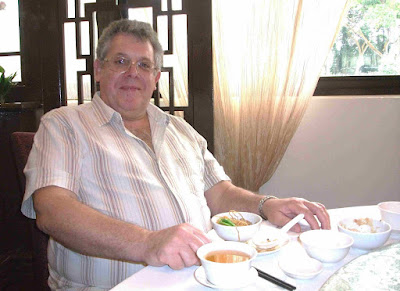


He was a senior lecturer (Contextural Studies) in the Yong Siew Toh Conservatory of Music until his retirement last year. From 2010, he regularly wrote concert reviews for The Straits Times and was the official music annotator for three professional orchestras, the Singapore Symphony, Malaysian Philharmonic and Hong Kong Philharmonic. He was extremely knowledgeable especially in the arcane vistas of music history, and his programme notes a fount of interesting information (and irreverent trivia) besides being refreshingly informal, and most of all, always filled with wicked wit. He always regarded himself as a “professional listener” rather than that crusty and self-important epithet, that of a music critic.   


Marc with his colleagues at YST,
Drs Adeline Wong & Craig de Wilde,
at the 2018 Singapore International Violin Competition.


I first saw him in 1999 when he travelled with the newly-formed Malaysian Philharmonic on its debut performances in Singapore, where he performed the pipe organ part of Tchaikovsky’s Manfred Symphony at Victoria Concert Hall. It was several years later on another MPO tour when we actually met at Esplanade Concert Hall, and clicked instantly. He was ever-friendly and regularly regaled me with stories about Asia’s newest hot-shot orchestra, with its fair share of triumphs and misadventures.


What do you call a group of music critics?
Marc's preference was for the word "gaggle".
Taken at OMM's Mahler Second Symphony 
performance at Esplanade in 2010.


After he moved his base from Kuala Lumpur to Singapore, I got him on board the music reviewing team of Life!, The Straits Times’ lifestyle pages. The national daily could certainly do with a diversity of voices and someone of his vast experience, having been a reviewer for Gramophone and the highly-respected but now-defunct International Record Review. His acute observations about performances were invaluable, his free-wheeling way with words always enjoyable to read, not to mention his unforgettable put-downs.


Names redacted to protect the guilty.


He was known to be an equal opportunity music critic, that is every artist or performing group had an equal right to be criticised or slammed. He had a special relish for that time of season when The Straits Times requested for the “Worst Concert of the Year”, which he duly supplied with a wicked glint in the eye. Artists with pretentions, puffed-up with pompous self-promotion were fair game for his opprobium, with little regard for their stations in the musical world.  He once remarked, “I’ve never given a bad review, but reviewed plenty of bad performances!” The exceptions were music students and young up-and-coming artists, who received nothing less than appropriate plaudits and whole-hearted encouragement.
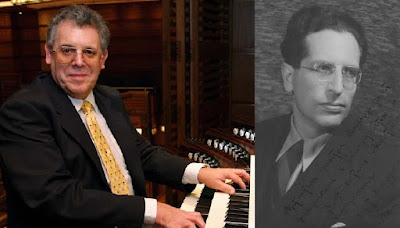
 

A victim of my crazy musical lookalikes:
Marc with his twin and doppelganger
German conductor Kurt Sanderling


Outside of music, he was an ever-hospitable host. My family was once invited to a dinner at his East Coast Road home, where he had invited a young Malay guzheng player to enthrall all present with his virtuosity. On more than one occasion, I urged him to write a book about his extremely colourful life and travels (and travails) in classical music, but sadly that opportunity has been lost. However, we still have his wonderfully eventful and erudite blog (Dr Marc's Blog (marcrochester.com)),which is filled with his rants and raves, innumerable gems and nuggets of insights, all imprinted with his irrepressible and inimitable writing style. Long may that stay online as a fitting tribute to one who loved, worshipped and celebrated good music like no other.


Marc, your humour, humanity and hilarious stories will be missed by us all. 


Is the Golden Age of Music Reviewing
in Singapore over? Discuss.

Update: 
Marc's last blog is no longer available for viewing but some of his earlier essays and articles may be found here:


As I regularly leaf through pages of old copies of Gramophone, International Record Review or music review websites, and come across very well written reviews of a wide variety of music, I will inevitably look for the name of the reviewer. More often than not, the name is Marc Rochester. Thank you, Dr Marc, your influence continues even long after you have left us. 

Thursday, 24 October 2019

CD Review (The Straits Times, October 2019)


DEBUSSY Nocturnes / Printemps etc.
Singapore Symphony Orchestra
LAN SHUI
BIS 2232 / *****

This is the final instalment of the Singapore Symphony Orchestra’s three-disc survey of orchestral music by Claude Debussy (1862-1918), under the direction of former Music Director Shui Lan. Having recorded major works La Mer and Three Images for Orchestra, this disc concludes with the Three Nocturnes (1897-99), which helped establish the Frenchman as a frontline composer.

Impressionist in thought and colour, Nuages (Clouds) and Fêtes (Festivals) are musical tableaux distinguished by contrasting moods which are vividly evocative. The ennui of grey skies and frenetic pace of human activity are soon effaced by the haunting finale, Sirenes (Sirens), which features wordless women’s voices from the Philharmonic Chamber Choir of Europe  

There are also two concertante works, beginning with Rapsodie (1901-11), showcasing the variegated shadings of superb French saxophonist Claude Delangle, reminding one of the sinuous opening to the famous Prelude to The Afternoon Of The Fawn. The beautiful Two Dances (1904, Danse sacré et Danse profane) are graced by SSO principal harpist Gulnara Mashurova, who brilliantly brings out their alternatingly formal and sensuous faces, backed by just strings.

This interesting album is completed by various lesser-known odds and ends, the Scottish March On A Popular Theme (1890), Berceuse Heroique (1914), which quotes La Brabançonne, the Belgian national anthem, and the early Printemps (1887, orchestrated by Henri Busser), a reminder of the French Belle Epoque. SSO is served with spectacular sound, and the ecologically friendly packaging (with no plastic) does its part to save the planet. 


With this review, I conclude my fortnitely/weekly column of CD reviews for The Straits Times which began 22 years ago in 1997. There have been a total of 1186 CD reviews in total since the very first one (Paul McCartney's Standing Stone on EMI Classics). 

I thank The Straits Times for their faith in me, and indulging me in my musical whims and pianomaniac fancies. 

Thursday, 10 October 2019

CD Review (The Straits Times, October 2019)


THE NIGHT GARDEN
JO ANNE SUKUMARAN, Bassoon
KSENIIA VOKHMIANINA, Piano et al
Hello Stage 010 / ****1/2

With this album, Jo Anne Sukumaran became the first Singaporean bassoonist to record a solo recital on compact disc. An alumnus of the Singapore Youth Orchestra, she completed her studies in Switzerland before pursuing a free-lance career as solo, chamber and orchestral bassoonist. Her programme is predominantly French but eclectic in its variety. She opens with Philippe Hersant’s Niggun, an unaccompanied Hasidic Hebrew song that showcases the bassoon’s wide tonal and emotional range.

This work also has spiritual and aesthetic connections with two of Spaniard Manuel de Falla’s Popular Spanish Songs – Asturiana and Nana – which are soothing and tender in expression, and the titular The Night Garden by Sukumaran and tabla player Sanjay Kansa Banik. The latter is a short improvisation accompanied by tanpura based on two ragas that explore mysteries of the night and Sukumaran’s own Indian heritage.

In between are Camille Saint-Saens’s Bassoon Sonata (Op.168), a late work exploiting the bassoon’s avuncular and playful character. Charles Koechlin’s Three Pieces (Op.34), Alexandre Tansman’s Sonatina and Norwegian bassonist Robert Ronnes’ Reflexion are virtuosic yet soulful additions, sensitively accompanied by pianist Kseniia Vokhmianina. This is a probing and enjoyable album, highlights of which are relived by Jo Anne and her friends in recital at Esplanade Recital Studio at 7.30 pm on Sunday 20 October 2019. Tickets are available at Peatix.

Thursday, 26 September 2019

CD Review (The Straits Times, September 2019)


PIANO BOOK
LANG LANG, Piano
Deutsche Grammophon 479 8109 1 / ***

In his latest album, Chinese piano phenom Lang Lang has gone back to basics, playing pieces he learnt as a child. There are some no-brainers which open this 72 minute anthology, such as J.S.Bach’s Prelude in C major from Book One of The Well-Tempered Clavier and Beethoven’s immortal Für Elise. He plays these easy pieces with simplicity and finesse.

However in the very familiar 1st movement of Mozart’s Sonata Facile in C major (K.545), he attempts some ornamentations which get annoying on repeated listening. Debussy’s Clair de lune comes across as being just too slow, while Tekla  Bardazewska-Baranowska’s The Maiden’s Prayer sounds banal whoever is playing. Surely, Mozart’s Variations on Ah, vous dirai-je Maman (Twinkle Twinkle Little Star) is beyond the technique of piano beginners, as is Mendelssohn’s Spinning Song and Debussy’s Gradus Ad Parnassum (Children’s Corner Suite).

Surely he would not have known of pieces by Max Richter, Yann Tiersen or Ryuichi Sakamoto growing up in Shenyang, but the Japanese film composer’s Merry Christmas Mr Lawrence receives a grandstanding rendition.

The Super Deluxe edition of this album runs onto two discs and includes a handsome hardcover book of scores and personal insights, with some 29 pieces in all. This is not a terrible album, but one cannot help feel it could have been much better.

Thursday, 12 September 2019

CD Review (The Straits Times, September 2019)


RARITIES OF PIANO MUSIC
AT SCHLOSS VOR HUSUM 2018
Danacord 839 / *****

There is a distinct focus on French music in last year’s selections from the world-renowned festival held in North Germany, highlights works from the far-reaching peripheries of the piano repertoire. Like the gusty North Sea air that envelopes the festival town of Husum, freshness distinguishes  performances of pieces by Gabriel Dupont, Louis Vierne, Reynaldo Hahn, Alkan and Debussy. 

Faintly familiar strains come in the opening track from Debussy’s early and little-known Ballade, played by young German pianist Fabian Müller. Despite being supposedly Slavic in influence, this piece however inhabits the aesthete of the French belle epoque.

The real discovery are two pieces from Dupont’s cycle La maison dans les dunes (The House on the Dunes). Entitled On the Dunes One Clear Morning and Swells, these are impressionist and hauntingly beautiful from the German Severin von Eckardstein’s fingers. Despite his French-sounding name, Jean Louis Nicodé was actually Prussian. Two of his miniatures, Repentence and Remembrance from A Life Of Love bear the influences of Schumann, lovingly realised by British pianist Simon Callaghan.

Also to be heard are shorter pieces by Pancho Vladigerov, Valery Arzumanov, Leonid Desyatnikov, Robert Fuchs, Anton Arensky, Gabriel Grovlez and transcriptions of Rachmaninov and Piazzolla. The pianists represented are as diverse as Muza Rubackyte (Lithuania), Etsuko Hirose (Japan), Lukas Geniusas (Russia), Ingrid Marsoner (Austria), Sina Kloke (Germany) and Antonio Pompa-Baldi (Italy). How’s that for sheer variety? As they say, vivé la difference!    

Thursday, 29 August 2019

CD Review (The Straits Times, August 2019)


ION VOICU The Decca Recordings
Decca Eloquence 480 7841 (2 CDs) / ****1/2

Those who tuned in to Singapore Broadcasting Corporation’s 92.4FM stereo classical station during the 1970-1980s might remember the name of Romanian violinist Ion Voicu (1923-1997), whose long-playing records were aired in those more interesting and eclectic days of radio. This album brings together the contents of three LPs dating from 1965 to 1973, never previously issued on CD.

Voicu was born into the Romani tradition of violin playing, and was a student of Georges Enesco and later David Oistrakh. This pedigree would account for his playing of refinement and understated virtuosity, which shuns faceless surface glitz and vulgarity. 

The album’s first disc coupling the popular Mendelssohn (E minor) and Bruch (No.1) violin concertos is enjoyable for its directness and simplicity of approach. He is partnered with the London Symphony Orchestra conducted by Rafael Frühbeck de Burgos.

20th century violin sonatas make up the balance of the 150 minutes, all of which are tuneful and accessible. With French pianist Monique Haas, Prokofiev’s Sonata No.2 (originally for flute) and Debussy’s late Sonata make for fascinating contrasts. The Second Violin Sonata by Darius Milhaud is a delightful rarity, with folk music influences and pentatonic melodies that remind one of Chinese music.

The third album includes a thrilling reading of Ysaye’s unaccompanied Sonata No.5, and has  Romanian pianist Victoria Stefanescu accompanying him in the Second Sonatas of Ravel and Enesco. The Ravel is famous for its Blues second movement (where violin mimics banjo), while the slightly more dissonant and darkly-hued Enesco is a real find. Here is a showcase of violin playing of true distinction.

Thursday, 15 August 2019

CD Review (The Straits Times, August 2019)


HANDEL GOES WILD
L’Arpeggieta / CHRISTINA PLUHAR
Erato 0190295811693 / *****

The music of Georg Frideric Handel (1685-1759), like his close contemporary J.S.Bach, is ripe for improvisation, as demonstrated by Austrian baroque music specialist Christina Pluhar and her period instrument group L’Arpeggiata. This group’s use of jazz and world music techniques in Pluhar’s arrangements makes it stand out.

Handel’s operatic arias, sung in both Italian and English, are known for their purity, beauty and often treacherously virtuosic runs. Countertenor Valer Sabadus and soprano Nuria Rial sing these straight and without further embellishment, such as in Venti, Turbini and Cara Sposa (from Rinaldo) and Piangero La Sorte Mia (Giulio Cesare).

It is however in the instrumentation that the music takes on a different dimension. Listen to how Gianluigi Trovesi’s clarinet turns the Sinfonia from Alcina into a Klezmer dance. Or whoever thought that the familiar Where’er You Walk (Semele) could be made to sound like a close cousin of Gershwin’s I Got Plenty O’ Nuttin’ (Porgy And Bess)?

The Arrival Of The Queen Of Sheba (Solomon) gets all jazzed up with Francesco Turrisi on piano, and in Canario, an improvisation based on Girolamo Kapsberger, percussionist Sergey Saprichev takes on the idiom of konnakol (Carnatic rhythmic scat singing) convincingly. 

To close, Ombra Mai Fu (Serse), better known as Handel’s Largo, Doron Sherwin’s cornet paves the way for Sabadus’ moving plaint. Old and new sit easily in the true spirit of the baroque within this fascinating album, all 75 minutes of it. 

Thursday, 1 August 2019

CD Review (The Straits Times, August 2019)


ROMANCE
Piano Music of Clara Schumann
ISATA KANNEH-MASON, Piano
Decca 485 0020 / ****1/2

This year marks the 200th birth anniversary of Clara Schumann (1819-1896). Born Clara Wieck, she was the wife of the great German composer Robert Schumann, mother to eight children, and a former child prodigy who became one of the world’s greatest concert pianists. She was also a composer, however far overshadowed by her husband, whom she survived by some 40 years.

British pianist Isata Kanneh-Mason (born in Nottingham of parents from Antigua and Sierra Leone) makes the strongest case possible for Clara’s major compositions for piano. Her Piano Concerto in A minor, completed when she was just 16, is very accomplished even if somehow derivative for the early-Romantic age. 

Technical virtuosity is given in the fast outer movements, but the slow movement is the most touching. Her use of a significant cello solo pre-dates that of both Liszt and Brahms in their second piano concertos. Here she is partnered by the Royal Liverpool Philharmonic Orchestra conducted by Holly Mathieson.

The other major work is the 20 minute-long Piano Sonata in G minor, in four movements, published as recently as 1991. It is as serious as a sonata can get, but still an enjoyable listen. Also included are Three Romances Op.11, Three Violin Romances Op.22 (with violinist Elena Urioste) and Scherzo No.2 in C minor Op.14, lyrical works that remind one of Mendelssohn and Robert Schumann himself. 

Clara as a transcriber of her husband’s songs, like Widmung (Dedication) and Mondnacht (Moonlit Night), is ever sensitive and never vulgar. Essential listening for romantics. 

Thursday, 18 July 2019

CD Review (The Straits Times, July 2019)


THE CAMBRIDGE BUSKERS COLLECTION
The Cambridge Buskers
DG Eloquence 482 1785 (4 CDs) / ****1/2

Remember the Cambridge Buskers? Formed by Michael Copley and Dag Ingram, the duo met while they were students at Cambridge University, and became a worldwide performing sensation during the late 1970s and 80s, decades before the age of Youtube. 

Their brand of “reduced classics” - abridged but not dumbed down arrangements of popular classical tunes – was accomplished on an assortment of blown instruments (recorders, flutes, crumhorns, whistles et cetera) by Copley (the dorky looking one), accompanied on accordion by Ingram (the good looking one).

This four disc collection crams in five albums worth of music, including favourites heard during their Victoria Concert Hall concert at the 1988 Singapore Arts Festival.  Who could forget the ingenuity of fitting Beethoven’s nine symphonies within a three-minute romp, or J.S.Bach’s Six Brandenburg Concertos in three movements, including an in-joke involving the 2nd movement of Brandenburg Concerto No.3.

The farce of Pachelbel’s Cannon (not a spelling mistake) wears thin after two listens, while the 32 seconds that make up the 4th movement of the 4th Symphony of Mahler (known for his very long symphonies) is a parody on the gift of brevity or lack of. There are 131 tracks (some 4 hours 55 minutes) in total, spanning the baroque to the Beatles, which make for a fun “Guess that tune” game for children and adults alike.    

Thursday, 20 June 2019

CD Review (The Straits Times, June 2019)


TEDD JOSELSON
Complete RCA Album Collection
RCA Red Seal 19075903272 (6 CDs) / ****1/2

Sony Classical has been systematically releasing boxed sets of pianists who recorded on the RCA Victor and Columbia Masterworks labels, from legends Arthur Rubinstein and Vladimir Horowitz to their younger colleagues like Van Cliburn and John Browning. The collection has now mined the archives of Belgian-American pianist Tedd Joselson, who had a relatively short but distinguished performing career from the 1970s until he retired to Singapore in the late 1990s.

His recording debut in 1974, at 21 and RCA’s then youngest exclusive pianist, was nothing short of miraculous. Performing Tchaikovsky’s First Piano Concerto and Prokofiev’s Second Piano Concerto, with no less than The Philadelphia Orchestra under Eugene Ormandy, is comparable to what the likes of Lang Lang and Yuju Wang did in their youths. The performances reveal neither hints of reticence nor nerves, as if coming from a well-seasoned veteran. 

Joselson was marketed as a Romantic pianist, evidenced by the energetic but finely-honed readings of Liszt’s Sonata in B minor, Chopin’s “Funeral March” Sonata and Mussorgsky’s Pictures at an Exhibition. However, pride of place goes to the selection of five sonatas by Russian 20th century giant Sergei Prokofiev (Nos.2, 6, 7, 8 and 9), where he finds a rare poetic sensibility amid often abrasive and percussive pages. 

The latest recording, of the Sixth Sonata (dating from 1979),  has never been previously released. The music never succumbs to raw or pummelling brute force, but glows in a radiant new light. All the original cover designs and sleeve-notes have been retained in this unusual find with a Singaporean connection.   

Thursday, 6 June 2019

CD Review (The Straits Times, June 2019)


BEETHOVEN Piano Concerto No.4
CHOPIN Sonata No.2 / Ballade No.4
ERIC LU, Piano
Hallé Orchestra / Edward Gardner
Warner Classics 0190295552152 / ****1/2

When 20-year-old Eric Lu was awarded 1st prize at the 2018 Leeds International Piano Competition, he became the first-ever ethnic Chinese pianist to do so, and the first American to win the Leeds since Murray Perahia in 1972. Lu’s debut CD recording, a useful calling card, comprises  performances from the heat of competition. While without the absolute perfection of recording studio sessions, these are very good live readings of popular works that can fully withstand repeated listens. 

Chopin’s Fourth Ballade builds up majestically to an impassioned climax, and unwinds with a fiery coda which simply sizzles. Equally trenchant is Lu’s view of Chopin’s Second Sonata, also known as the “Funeral March” Sonata. He never lets the tension sag, even in the eponymous slow movement, where true pathos comes out poignantly.  

One cannot imagine Lu to have performed Beethoven’s Fourth Piano Concerto in G major many times prior to this, but he already sounds like a seasoned veteran alongside the Hallé Orchestra. The piano’s opening solo chords are taken deliberately but with a clear sense of purpose, and the barnstorming outer movements are robustly held together. The conversation with orchestral strings in the “Orpheus taming the Furies” episode of the slow movement is rapt, little wonder he was voted to win the Orchestra Prize outright.  

Eric Lu replaces an indisposed Martha Argerich at the Singapore Symphony Orchestra concert at Esplanade on Friday evening (7 June 2019), performing Chopin’s First Piano Concerto. Try not to miss this.

Thursday, 23 May 2019

CD Review (The Straits Times, May 2019)


FOUR WORLDS
MOYE CHEN, Piano
Deutsche Grammophon 481 7037 / *****

It is often opined, particularly by Western music critics, that Asian musicians have loads of technique but lack feeling, gravitas, authenticity and even originality in their playing. Here is a new recording of music from the “Golden Age of the piano” that challenges that notion by Beijing native Moye Chen, making his debut disc after winning 3rd prize at the 2016 Sydney International Piano Competition.

Its title refers to the continents inhabited by the three great 20th century pianist-composers Sergei Rachmaninov, Vladimir Horowitz (Europe) and Percy Grainger (Australia), and Chen himself (Asia) who made their homes and careers in the United States of America. The works, both original works and transcriptions, represent a wide range of styles.

There is an “Old World” Romanticism to Rachmaninov’s early pieces (Serenade and Melodie from Op.3, and Humoresque from Op.10). Here he performs the alternative versions which are almost improvisatory and far more difficult. A bygone patriotic spirit occupies Grainger’s Colonial Song and Londonderry Air, before striding expansively into the jazzy “New World” swagger of Grainger’s In Dahomey (cheekily subtitled a “cakewalk smasher”) and Horowitz’s Danse Excentrique (a first cousin to Debussy’s Golliwogg’s Cakewalk).

Chen is fully attuned to these contrasting idioms, and emotes unsparingly in the perfumed paraphrases of Richard Strauss’ opera Der Rosenkavalier and Gershwin’s Broadway hit Love Walked In. Finally, outright virtuosity reigns in Horowitz’s outrageous transcription of Sousa’s The Stars And Stripes Forever (with two hands simulating three hands), and Rachmaninov’s over-the-top Second Sonata, also taking in Horowitz’s unbuttoned additions. There is no shame to gawk and enjoy here.

Thursday, 9 May 2019

CD Review (The Straits Times, May 2019)


SCHUMANN-GRÜTZMACHER 
Cello Transcriptions
Francesco Dillon, Cello
Emanuele Torquati, Piano
Brilliant Classics 94060 (2 CDs) / ****1/2

The German Romantic composer Robert Schumann (1810-1856) wrote such a small body of music for cello – a great cello concerto and handful of short chamber works – that it seems a real pity. This album of transcriptions by German virtuoso cellist Friedrich Grützmacher (1832-1903) of Schumann’s Lieder, selected piano pieces and an entire sonata is a godsend for cellists seeking new repertoire.  

Schumann’s most popular lied, Widmung (Dedication), opens the selection of 17 song transcriptions. Also included are Der Nussbaum (The Walnut Tree), Frühlingsnacht (Spring Night), Mondnacht (Moonlit Night), The Two Grenadiers (which concludes with La Marseillaise, the French national anthem) and two numbers from song cycles Frauenliebe und Leben (A Woman’s Love And Life) and Dichterliebe (A Poet’s Love), all familiar tunes.

The autumnal Second Violin Sonata in D major (Op.121), in four movements, is also his most ambitious. Here it becomes a glorious cello sonata, full of brooding passion and foreboding. The transcriptions of piano pieces are mostly of miniatures, such as Schlummerlied (Slumber Song), The Happy Farmer and Soldier’s March. However all 13 pieces of Kinderszenen (Scenes From Childhood), including the unforgettable Träumerei (Dreaming), take pride of place. The Italian duo of Dillon and Torquati are excellent, making the best case possible of Schumann’s lyrical gifts.

Thursday, 25 April 2019

CD Review (The Straits Times, April 2019)


BRUNEAU
L’Attaque Du Moulin – Suite
Barcelona Symphony / DARRELL ANG
Naxos 8.573888 / ****1/2

It is likely that operatic composer Alfred Bruneau (1857-1934), a contemporary of Puccini and Elgar, is hardly known outside of his native France. He was credited for introducing verismo into French opera, substituting mythical and historical characters with modern-day personalities which contemporary audiences could better relate to. This ground-breaking album brings together over an hour of orchestral excerpts from his little-known and almost-forgotten operas. 

A 22-minute suite comes from L’Attaque Du Moulin (The Attack On The Mill, 1893), a “lyric drama” inspired by a short story by Emile Zola. The highly evocative music brings to mind the orchestral music from Italian verismo composer Pietro Mascagni’s familiar Cavalleria Rusticana

Even more ambitious is the ballet La Legende De L’Or (The Legend Of Gold) from Messidor (1897), just over half an hour long, which displays influences of the German Richard Wagner, specifically music from his Ring cycle. Two short preludes from Messidor and Nais Micoulin (1907) make interesting fillers.

Darrell Ang and the excellent Barcelona Symphony give fine and idiomatic performances, for which attention to orchestral detail is not spared. One will be hard-pressed to find better recordings this obscure but thoroughly worthy music.   

Thursday, 11 April 2019

CD Review (The Straits Times, April 2019)


PRELUDES TO CHOPIN
KENNETH HAMILTON, Piano
Prima Facie 084 / ****1/2

Does the musical world need more recordings of Frederic Chopin’s piano music? If your answer is “No”, then think again, as the Cardiff-based Scottish pianist Kenneth Hamilton makes a persuasive case of listening to Chopin differently, based on his research of historical performances. Even his ordering of the pieces is unusual. Every major work is prefaced by one Prelude. These short pieces, originally conceived to precede longer pieces, can now be heard in context.

The nocturne-like Prélude in C sharp minor Op.45, often played as a stand-alone piece, is heard before the “Funeral MarchSecond Sonata (Op.35) in B flat minor. These two keys are harmonically related, and the ear perceives the movements as almost seamless. 

In the Funeral March proper, the inclusion of bass octaves makes it sound doubly harrowing. His later inclusion of the stormy Prélude in E flat minor (Op.28 No.14) is canny too, serving as a belated echo to the sonata’s eerie finale, once described as “wind blowing over the graveyard”.    

Hamilton’s view of the Third Sonata in B minor (Op.58) is short-winded by omitting the 1st movement repeat, the perfect antithesis of Lang Lang’s intractable reading. In the “HeroicPolonaise in A flat major (Op.53), he plays Ferruccio Busoni’s amplifications in the galloping octave episode, creating an over-the-top and thunderous effect. 

Finally, he performs Franz Liszt’s own elaboration of Chopin’s Polish song Moya Pieszczotka (Mes Joies or My Joys) as remembered by Liszt student Bernhard Stevenhagen on a piano roll. This is Chopin heard through new ears indeed.