Showing posts with label Wang Xiayin. Show all posts

Wednesday, 7 December 2016

CD Reviews (The Straits Times, December 2016)


TCHAIKOVSKY Piano Concerto No.2
KHACHATURIAN Piano Concerto
XIAYIN WANG, Piano
Royal Scottish National Orchestra
Peter Oundjian (Conductor)
Chandos 5167 / ****1/2

Coupled for the first time are perhaps the two most unfashionable and maligned Russian-school piano concertos ever composed. Tchaikovsky's Second Piano Concerto in G major (1882) has never replicated the success or popularity of its forerunner. Although extremely tuneful, casting it in the major mode often equated the music with a lack of pathos, not to mention gravitas. 

Its very long 1st movement cadenza is problematic for pianists. The slow 2nd movement is in effect a glorified piano trio while the finale is a slight and comedic dance (complete with chuckles that might have inspired Woody Woodpecker) more associated with Saint-Saens.   

The Armenian Aram Khachaturian's Piano Concerto in D flat major (1937) is unabashedly populist and lowbrow, using folk-flavoured melodies and razzle-dazzle pianistic effects to mask its inadequacies. Its slow movement however employs the flexatone, which produces a high-pitched wheezy tone when vibrated, to famous effect. 

Both concertos have had champions among the great pianists in the past; Cherkassky and Gilels in Tchaikovsky, Kapell and Lympany in Khachaturian. Young Chinese pianist Wang Xiayin however holds her own in these incisive and energetic, no-holds-barred performances, which are boosted with superior recorded orchestral sound. Wallow if you dare.    

Thursday, 3 April 2014

CD Reviews (The Straits Times, April 2014)


AMERICAN PIANO CONCERTOS
XIANYIN WANG, Piano
Royal Scottish National Orchestra
Peter Oundjian, Conductor
Chandos 5128 / *****

It is a sign of the times that a superlative recording of the three most popular 20th century American piano concertos comes not from an American pianist in the mould of Earl Wild, Van Cliburn or John Browning, but a young Chinese lady. Shanghai native Xiayin Wang, who schooled at the Manhattan School of Music, has the multifarious idioms and influences of these virtuoso concertos down pat.

Samuel Barber’s Piano Concerto (1962), originally written for Browning, combines robust dissonance with a lingering post-Romantic lyricism. Wild was a champion of the next two concertos. Aaron Copland’s Piano Concerto (1926) mirrors his more familiar Clarinet Concerto with two contrasting movements, which move from an atmospheric stillness to starkly more angular and jazzy rhythms. Gershwin’s very popular Concerto In F (1925), which develops from his Rhapsody In Blue, is the ultimate marriage of classical form, jazz and big band sounds.

Wang does not just get the notes, but breathes the Americanisms to the manner born, while being excellently supported by the Scottish orchestra. Here is a winner from beginning to end.


ASHKENAZY
50 YEARS ON DECCA
Decca 478 5093 (50 CDs) / *****

In 2013, Decca Records issued this box-set to commemorate Russian-born pianist-conductor Vladimir Ashkenazy’s fruitful 50-year relationship with the British label. His first recording, Rachmaninov’s Third Piano Concerto with the London Symphony Orchestra conducted by Anatole Fistoulari in 1963, took place soon after his defection to the West after sharing 1st prize at the 1962 Tchaikovsky International Piano Competition. Lithe and mercurial, it is regarded by many as the finest of his four recordings of the work.

This set celebrates his finest moments as a solo, chamber and collaborative pianist. Pick of the crop include his views on Scriabin and Prokofiev sonatas and concertos from his earlier years, and the more recent Shostakovich Preludes & Fugues. His many collaborators included pianist-conductor André Previn, violinist Itzhak Perlman, cellist Lynn Harrell, the late soprano Elisabeth Soderstrom, all heard here in fine performances. Although his efforts as conductor are less stellar, there are still marvellous readings of Tchaikovsky, Shostakovich, Sibelius and Beethoven symphonies. No less than seven discs are devoted to Rachmaninov, his surest and truest love. There is much to enjoy here.

Thursday, 10 January 2013

CD Reviews (The Straits Times, January 2013)


RACHMANINOFF Piano Works
XIAYIN WANG, Piano
Chandos 10724 / ****1/2

Sergei Rachmaninoff (1873-1943) wrote piano music all through his musical career. This recital disc is an excellent representation of piano music from different periods of his life. The Six Moments Musicaux Op.16 (1896) preceded the disastrous premiere of his First Symphony and displays his maturity in different styles, from the lyric, tragic to the epic. His first set of Études-Tableaux Op.33 (1911) follow the kaleidoscopic range of his Préludes, but with an accent on the virtuosic and fantastic. The Corelli Variations Op.42 (1931), based on the popular La Folia theme, date from his years of exile and look ahead to the familiar Paganini Rhapsody. 

Recordings of his piano music abound, but what makes this one special is the China-born pianist Xiayin Wang’s intuitive feel of Rachmaninoff’s idiom. One that combines brooding melancholy through long sustained melodic lines with a breathless technical facility for its exacting multitudes of notes, she never makes the music sound hectic or laboured. Sitting through each of these sets proves a pleasure, one that is sealed by the vivid and excellent recorded sound. It does not take a Russian to make Rachmaninoff sound convincing.


THE SODRE COLLECTION
DAVID OISTRAKH, Violin
with VLADIMIR YAMPOLSKY, Piano
Alpha Omega Sound / ****1/2

This extremely rare “live” recording from 9 April 1954 was unearthed in the archives of SODRE, the official radio and television broadcasting service of Montevideo, Uruguay. It represents the Soviet-era Russian violinist David Oistrakh (1908-1974) at the height of his powers while on tour to the West. His programme was unusually eclectic despite offering no Russian music within. It opens with Jean-Marie Leclair’s Third Sonata, in the four-movement sonata da chiesa form that was popular during the Baroque era. Nowadays, it is rarely heard outside of the period instrument circle, but Oistrakh’s politically incorrect and vibrato-rich account makes no excuses for the music, which is charming and unpretentious.

The gem of this hour-long recital is a complete performance of the Sibelius Violin Concerto with the original piano accompaniment. This version is seldom ever recorded, although regularly played at conservatory and student recitals. Oistrakh performs it as if accompanied by an orchestra, with no punches pulled or half measures taken. It is a searing account, tender in the slow movement while the furious finale lives on a knife-edge throughout. The disc is completed by Belgian Ernest Chausson’s rhapsodic Poeme, also accompanied by pianist Vladimir Yampolsky. This invaluable addition to the Oistrakh discography may be purchased from various on-line retailers via the Internet. 


Friday, 10 June 2011

CD Reviews (The Straits Times, June 2011)


EARL WILD Piano Music
XIAYIN WANG, Piano
Chandos 10626 / *****


This is a tribute to great American pianist Earl Wild (1915-2010), for decades a proud upholder of the Romantic piano tradition when it was deemed unfashionable. He performed his last recital at 92 and mentored younger pianists (Singapore’s Abigail Sin was one of his students) well into his nineties. He also championed Gershwin music, once considered beneath “serious” pianists. Over an hour of this highly entertaining disc is devoted to Wild’s transcriptions of Gershwin, the big work being the Grand Fantasy On Porgy and Bess, 29 minutes of the best melodies dressed in his wondrously florid and subversively humourous style. He was more than a match for Liszt, Thalberg and Grainger.

In his Improvisation on Someone To Watch Over Me, he transforms the tune into a tango, but wickedly incorporating the Sinfonia from Bach’s Second Partita and a fugue. The Seven Virtuoso Études, based on Gershwin songs, have now become standards for today’s pianists. Finally, Wild’s own Piano Sonata (2000) shows a rare cognizance of popular 20th century styles, the finale being a literally wild Toccata a la Ricky Martin. Young Chinese pianist Xiayin Wang is a revelation, her rocking performances very much the equal of the late master’s own recordings. Have fun.


THE ROYAL WEDDING Official Album
Decca 277 9662 / ***


On April 29, when American troops were busily dispatching of Osama ben Laden and Singapore was gearing for General Elections, a small matter of the Royal Wedding took place in London. The pomp and pageantry of the ceremony, including the exchange of vows by Prince William and Catherine Middleton and various exhortations, was recorded in its entirety. The music amounted to almost an hour’s worth. There was to be no Elgar, his place taken by the underrated Charles Hubert Parry (1848-1918), whose music ought to be better known.

The Queen’s entrance was played out to his regal March Of The Birds, while the anthem I Was Glad greeted the bridal party. His Blest Pair of Sirens, representative of the best in English choral tradition, accompanied the signing of the Register. There were hymns for certain, both traditional (the ubiquitous Jerusalem, also by Parry) and contemporary (John Rutter at his most saccharine), partnered by the London Chamber Orchestra and organist Robert Quinney. Walton’s Crown Imperial provided the exit music, with Widor’s Toccata unceremoniously faded off, giving way to the carillons of Westminster Abbey. A pleasant diversion, but one more for the dyed-in-the-wool royalist.

Friday, 21 May 2010

CD Reviews (The Straits Times, May 2010)


BEETHOVEN Cello Sonatas (Complete)
LI-WEI QIN, Cello
ALBERT TIU, Piano
Decca 889 9119 (2CDs)
*****

Beethoven composed only five sonatas for the cello and piano, but these spanned the three different periods of his creative output. These are highly original works without precedent in the repertoire. The early pair of Op.5 sonatas are in two movements each; the first is preceded by a slow introduction, a nod to earlier baroque forms. This architecture is repeated in the late C major Sonata (Op.102 No.1), and the threesome is housed in the first disc. The “middle period” A major (Op.69) and final D minor Sonata (Op.102 No.2), slightly longer essays, come on a second disc.

The duo of Chinese-Australian cellist Li-Wei Qin and Filipino pianist Albert Tiu, both resident in Singapore at the Yong Siew Toh Conservatory, respond with vigour and brio, breathing life into these scores. Qin’s tone is voluminous and breathtaking, while Tiu’s exacting piano partnership comes through with great immediacy and clarity. With superb recorded sound, this set (which retails for the price of one disc) deserves to happily sit alongside celebrated versions by Rostropovich, Maisky and Yo-Yo Ma.


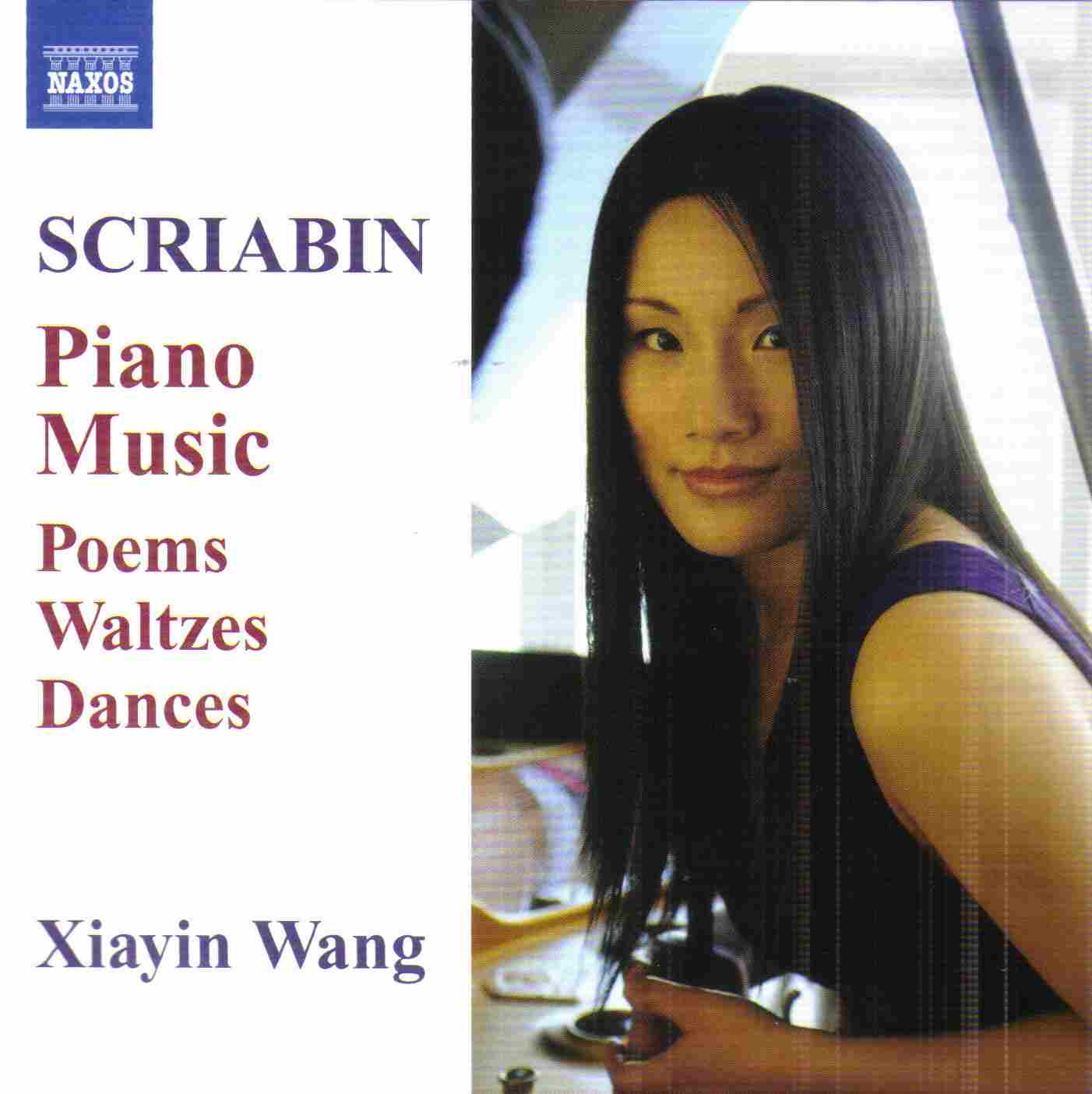
SCRIABIN Piano Works
XIAYIN WANG, Piano
Naxos 8.570412
****1/2


Towards The Flame is the unofficial title of this anthology of piano music by the Russian mystic composer Alexander Scriabin (1872-1915), chronologically tracing his evolution from ardent Romantic to raving modernist. The contrasts could not have been more stark, beginning with two early waltzes (Op.1 and Op. posthumous) which betray Chopin’s influence and salon pretensions. Becoming more adventurous with harmonies and dynamics, his Polonaise (Op.21) and Fantasy (Op.28) break free from social niceties.

Some of the shorter pieces are titled Poems, some with fanciful descriptions. Tragic Poem (Op.34) is restless while Satanic Poem (Op.36) is a ironic portrait of masked hypocrisy. The works get weirder and more enigmatic by the track, culminating in the eponymous Vers La Flamme (Towards The Flame), an obsessive single-themed number that splutters, sizzles and sears like a Roman candle. One writer described this as Scriabin’s vision of the nuclear bomb. The elegant American-trained Chinese pianist Xiayin Wang has the full measure of Scriabin’s neuroses and febrile flailings, with the vividly recorded sound and her personal programme notes as definite plusses.


MARTHA ARGERICH AND FRIENDS
LUGANO FESTIVAL 2009
EMI Classics 6073672 (3CDs)
*****

Chamber music festivals bring together musicians from all around the globe, often to play music not regularly heard in concert halls. These highlights from the 2009 Lugano Festival present some rarities, such as Mendelssohn’s precocious Piano Sextet (written when he was just 15), Glinka’s Grand Sextet (a jolly if un-nationalistic work) Ernest Bloch’s austere First Piano Quintet and Bartok’s elusive Second Violin Sonata. Performed before a “live” audience, there is an immediacy and frisson usually absent in studio recordings.

The chief instigator here is super-pianist Martha Argerich, who stars in no less than 80 minutes of music including the scintillating solo in Manuel de Falla’s sultry piano concerto Nights In The Gardens Of Spain (Orchestra della Svizzera Italiana conducted by Alexander Vedernikov). She also partners a host of rising talents in Schumann’s Fantasy Pieces Op.88 (with the Capuçon sibs) for piano trio, Chopin’s Introduction & Polonaise Brillante Op.3 (with cellist Gautier Capuçon), and piano duets - excerpts from Mendelssohn’s A Midsummer Night’s Dream (with newcomer Cristina Marton) and Liszt’s Don Juan Fantasy (with Mauricio Vallina). A very enjoyable three and a half hours that passes all too quickly.

Pianists for chamber works:
Khatia Buniatishvili (Mendelssohn & Bartok)
Polina Leschenko (Glinka)
Lilya Zilberstein (Bloch)